
Menopause Smart BraceletYour body is changing.
Time to understand it.
Romi uses your biometrics to deliver personalized insights on symptoms, sleep, and hormone shifts through every stage of menopause.


Why RomiBuilt for every part of your
menopause journey.
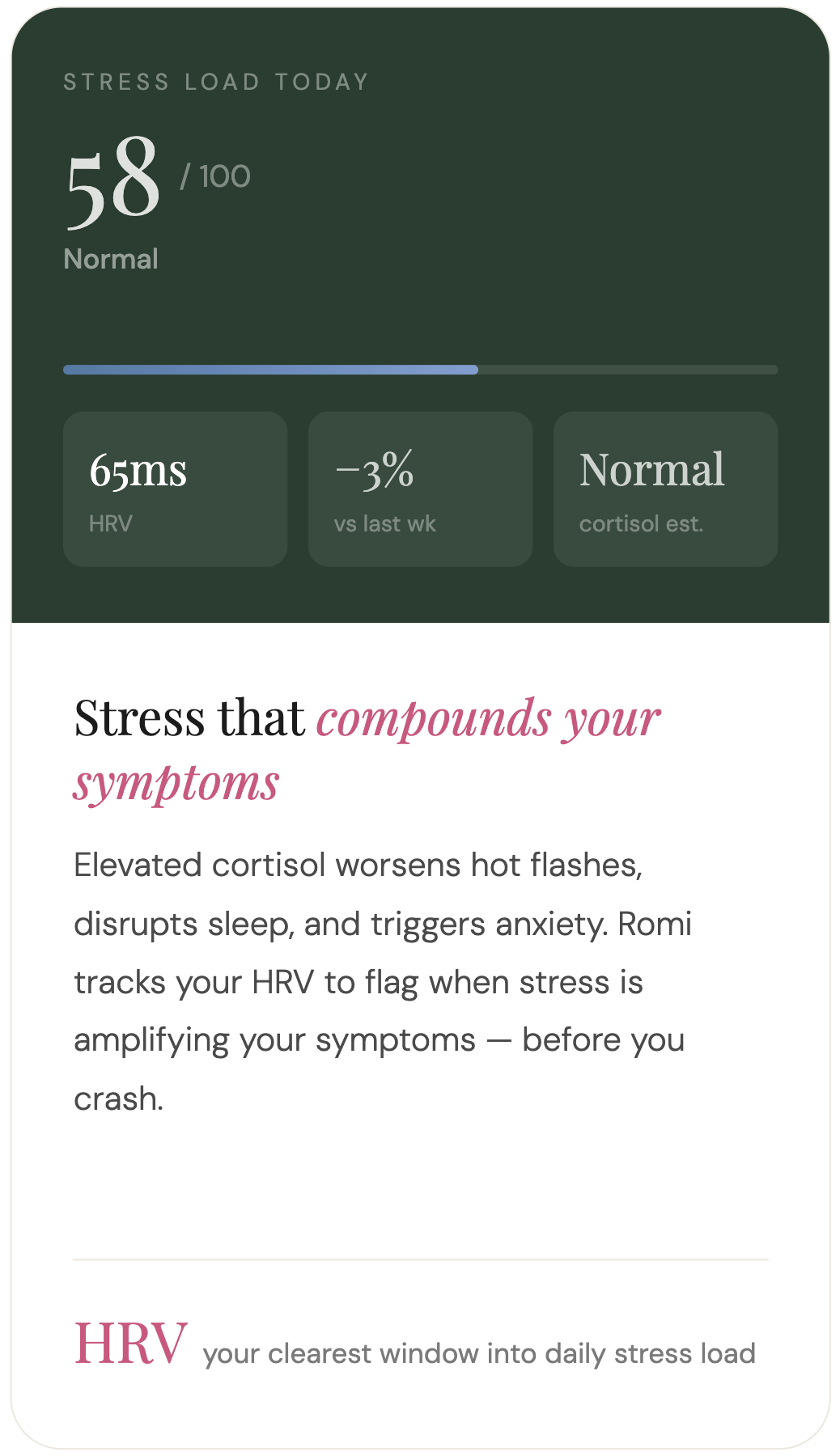
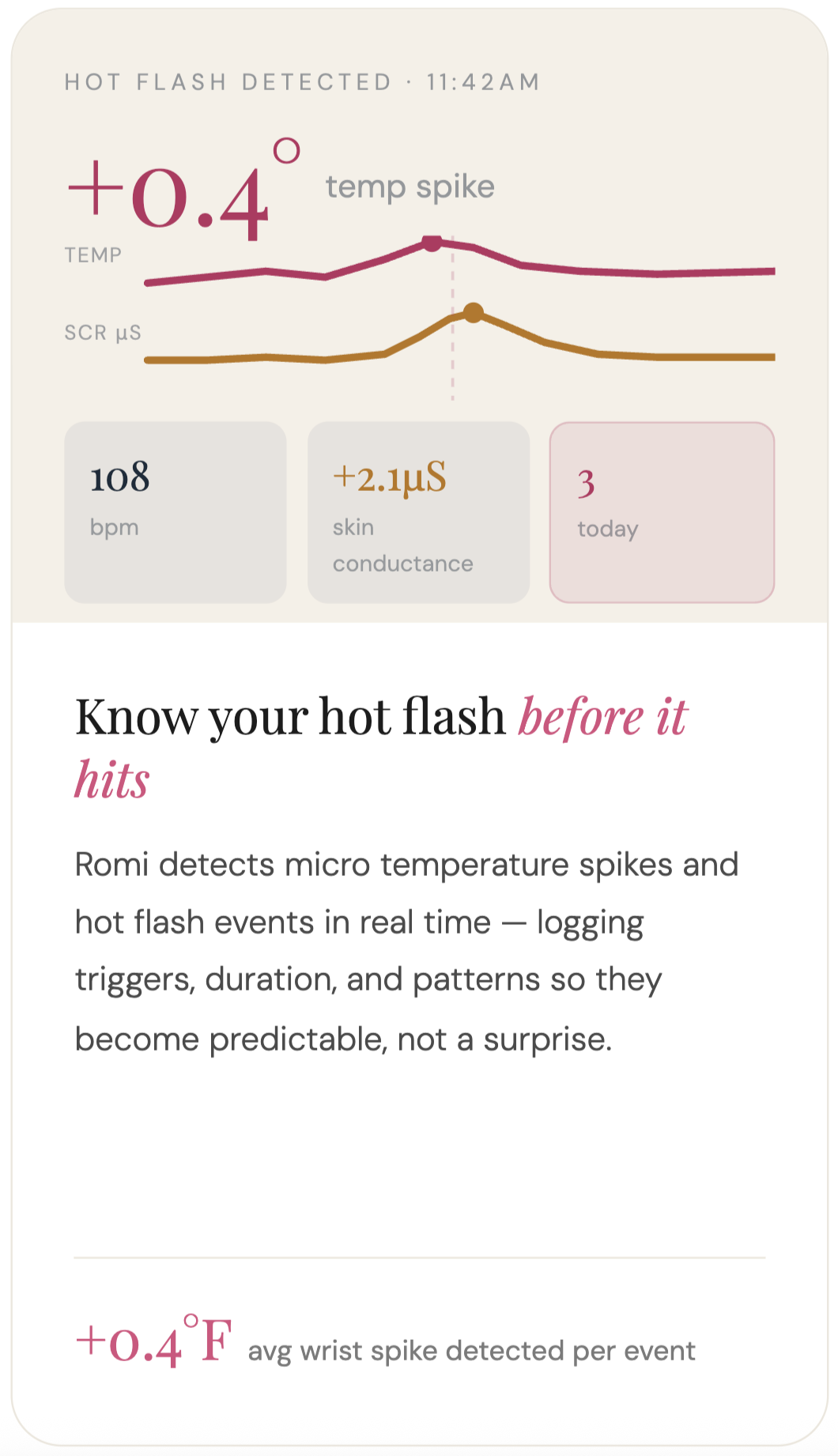
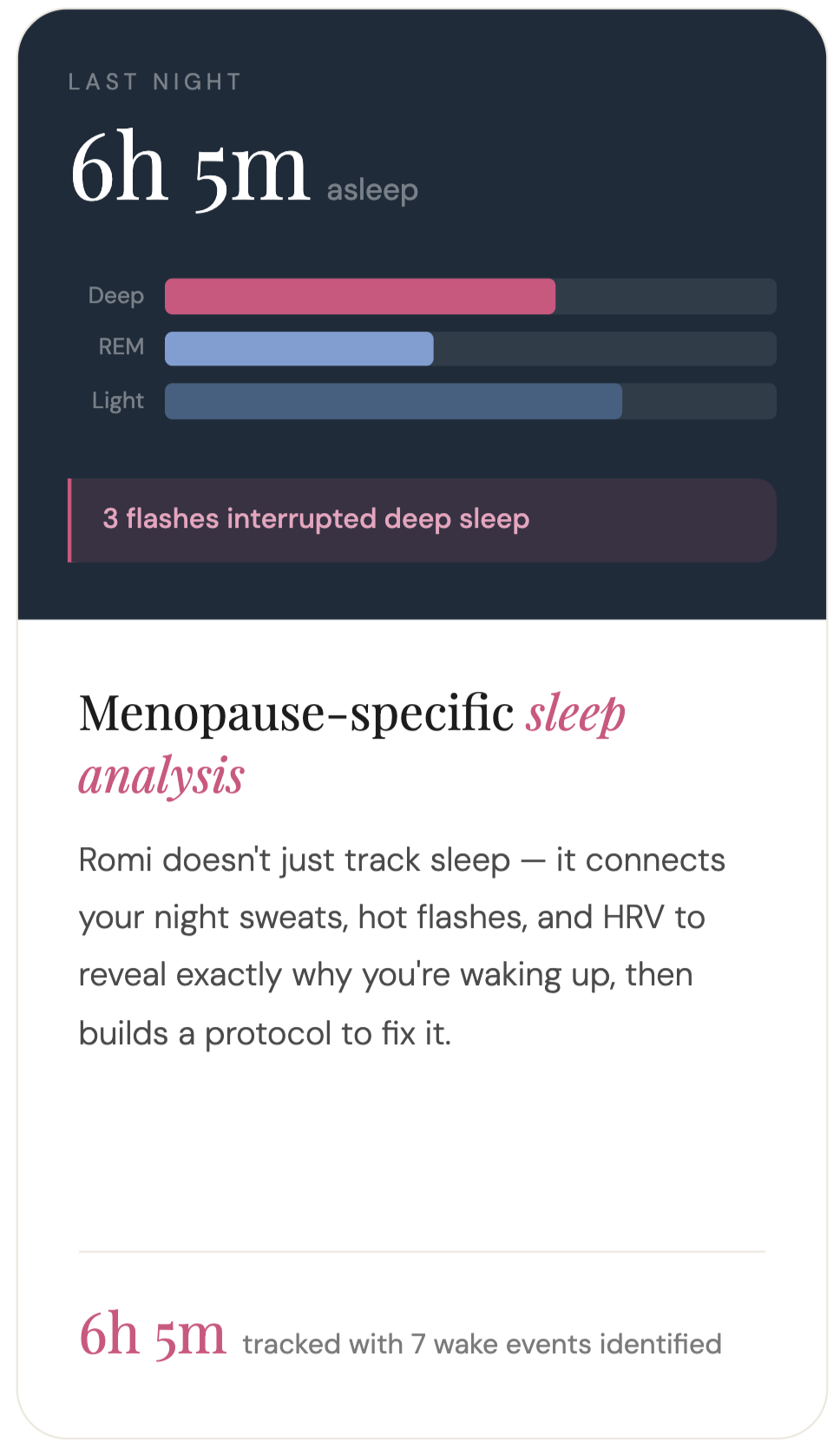
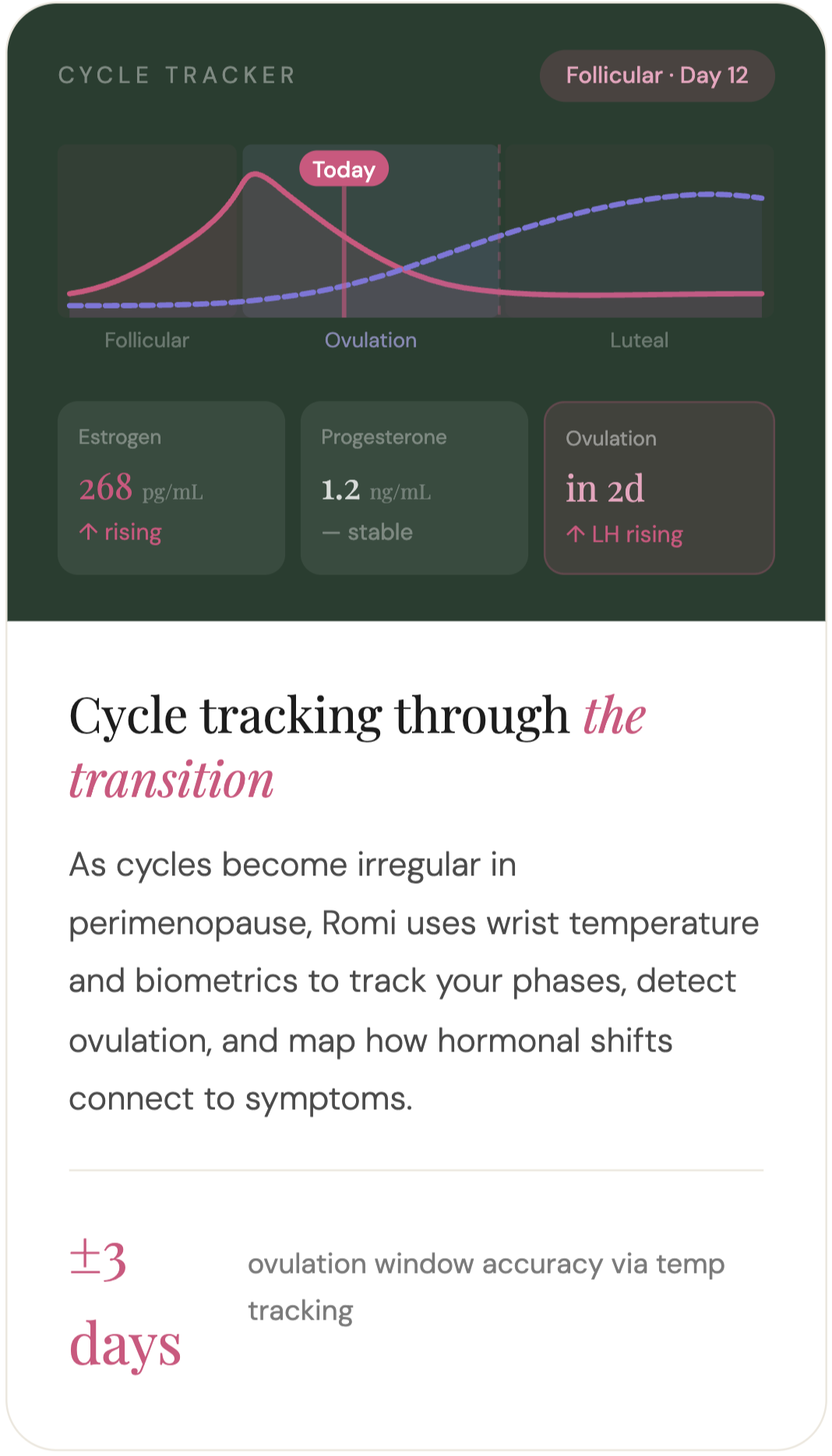
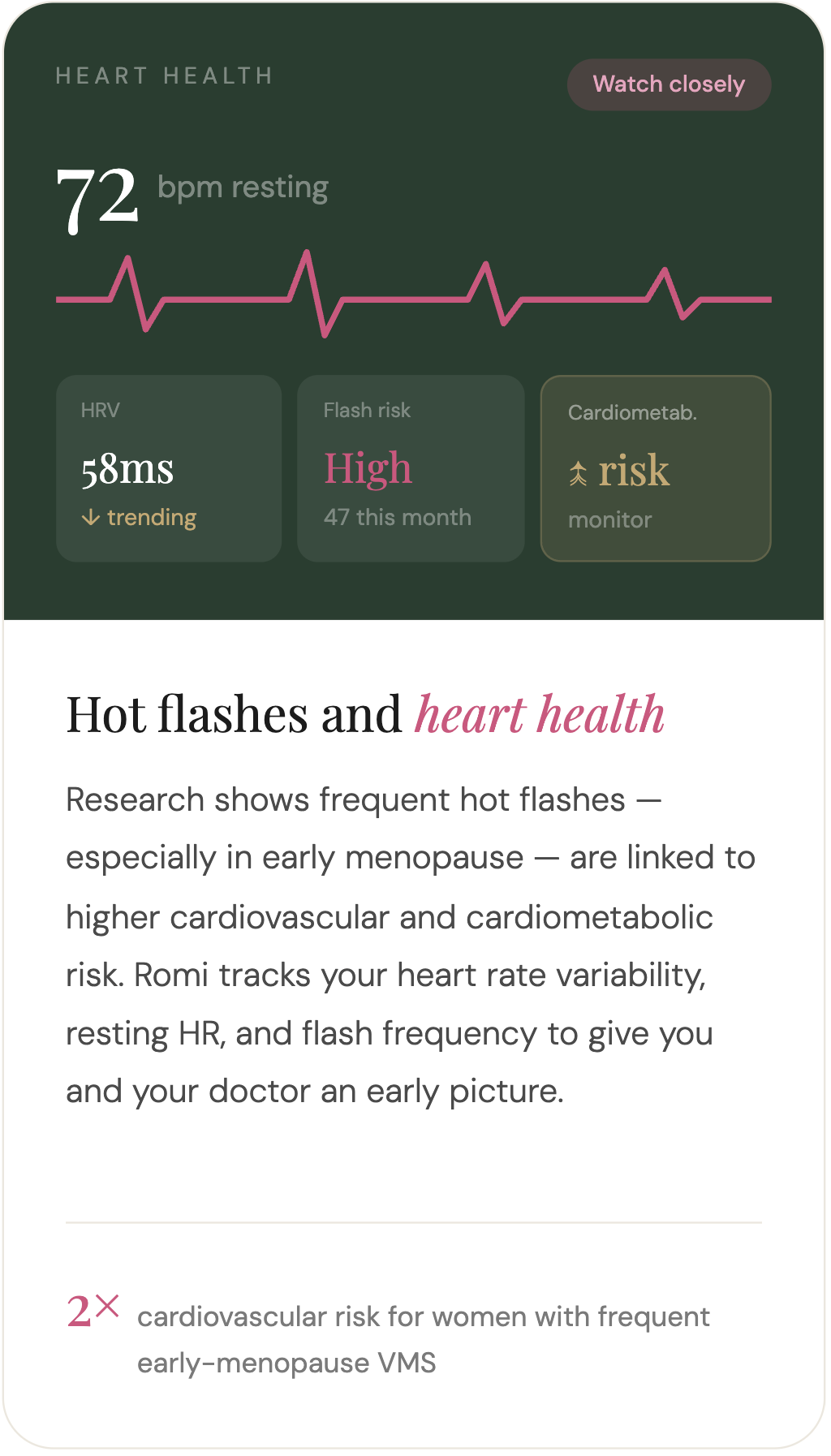
All of the biosignals that menopause affects are tracked, understood, and explained back to you.
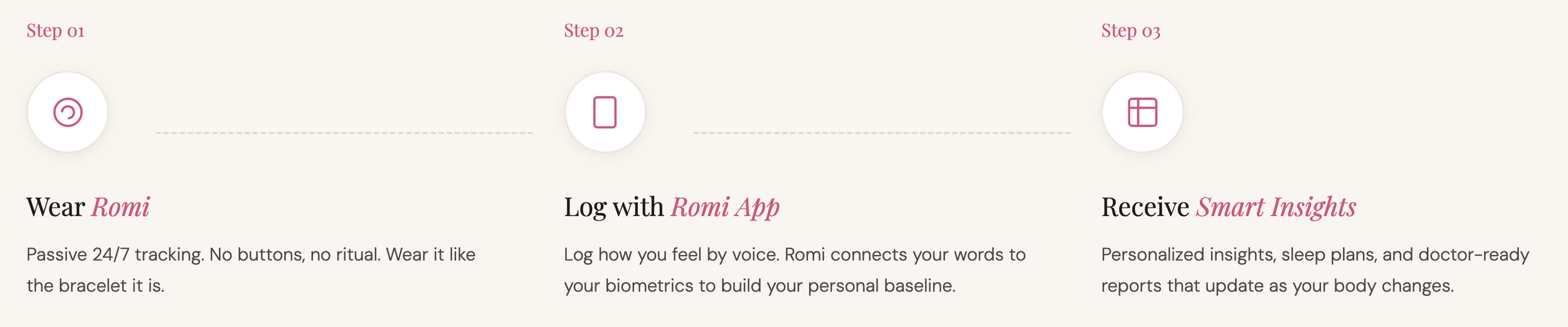
how it worksTake control in 3 simple steps.
Non-invasive and designed to integrate seamlessly into your daily life.
Your body,
your data.
Your privacy and trust is important to us.
Your health information stays yours—private, secure, and protected. Your data is only used to personalize your insights and optimize your experience.
Your information will not be shared with third parties.
The BraceletFine jewelry meets
fine-tuned data.
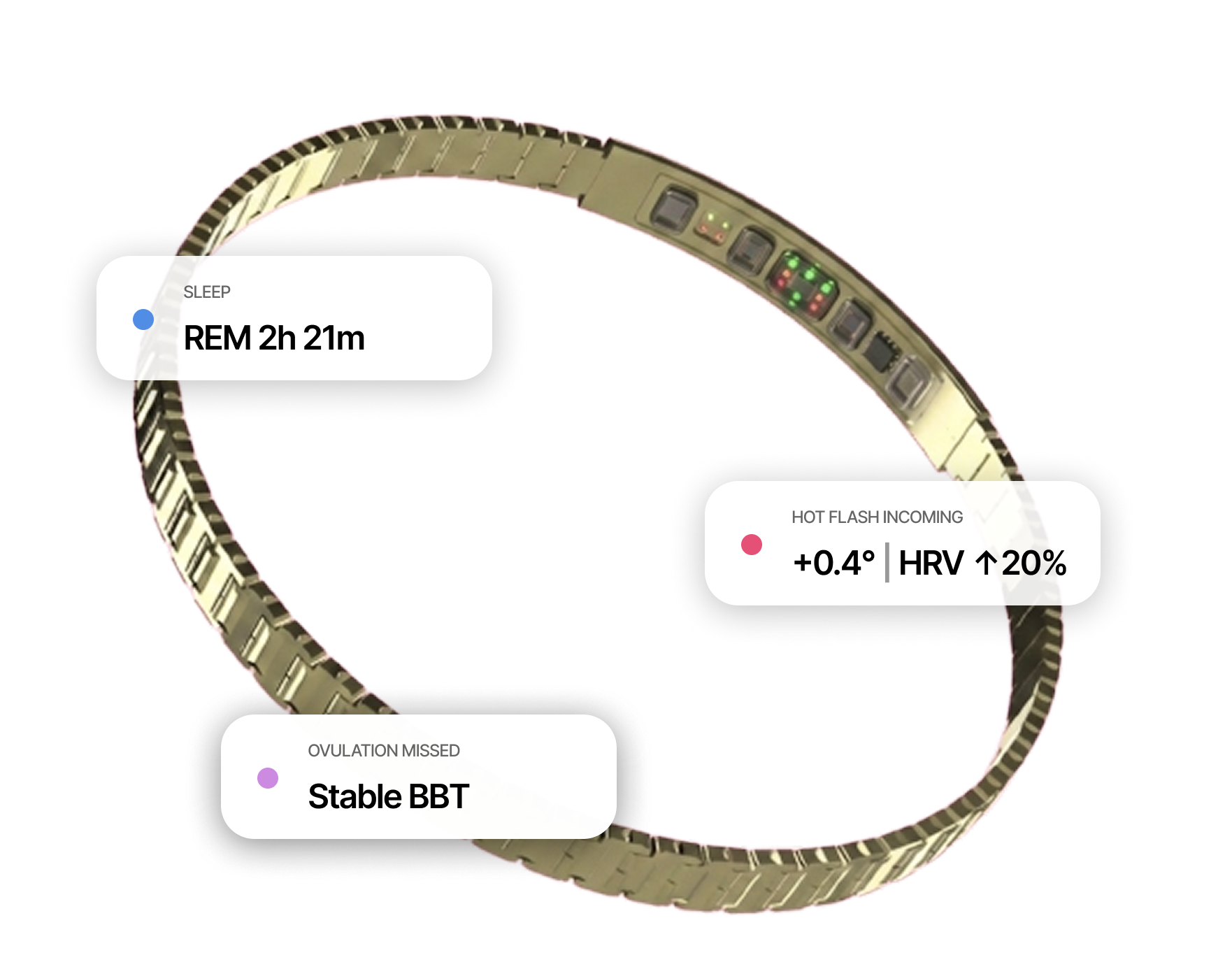
No bulky screens. No rubber straps. Romi is designed to look like jewelry first, technology second, because you shouldn't have to choose between beauty and health.

Sleep intelligenceSleep better,
feel better.
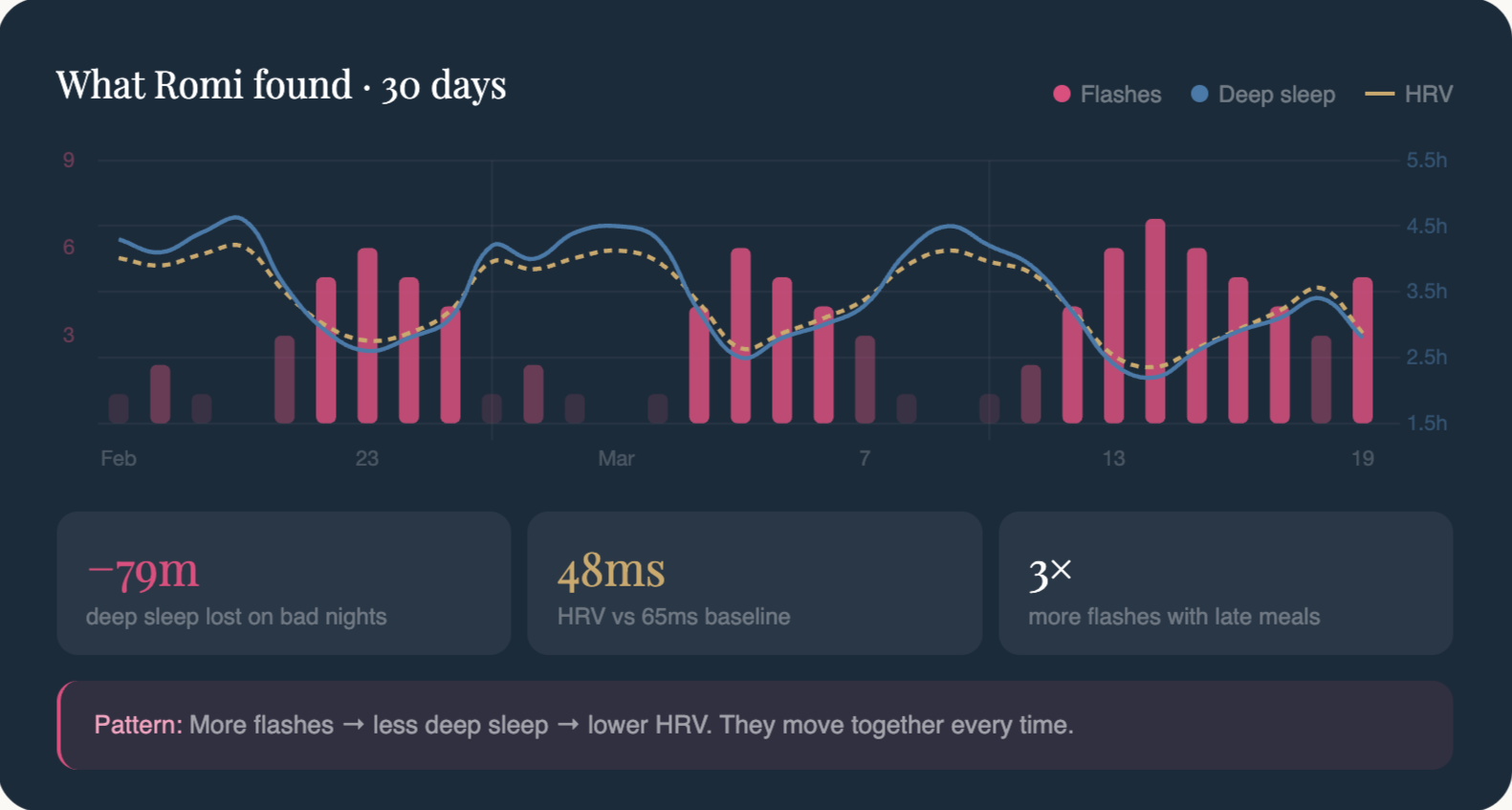
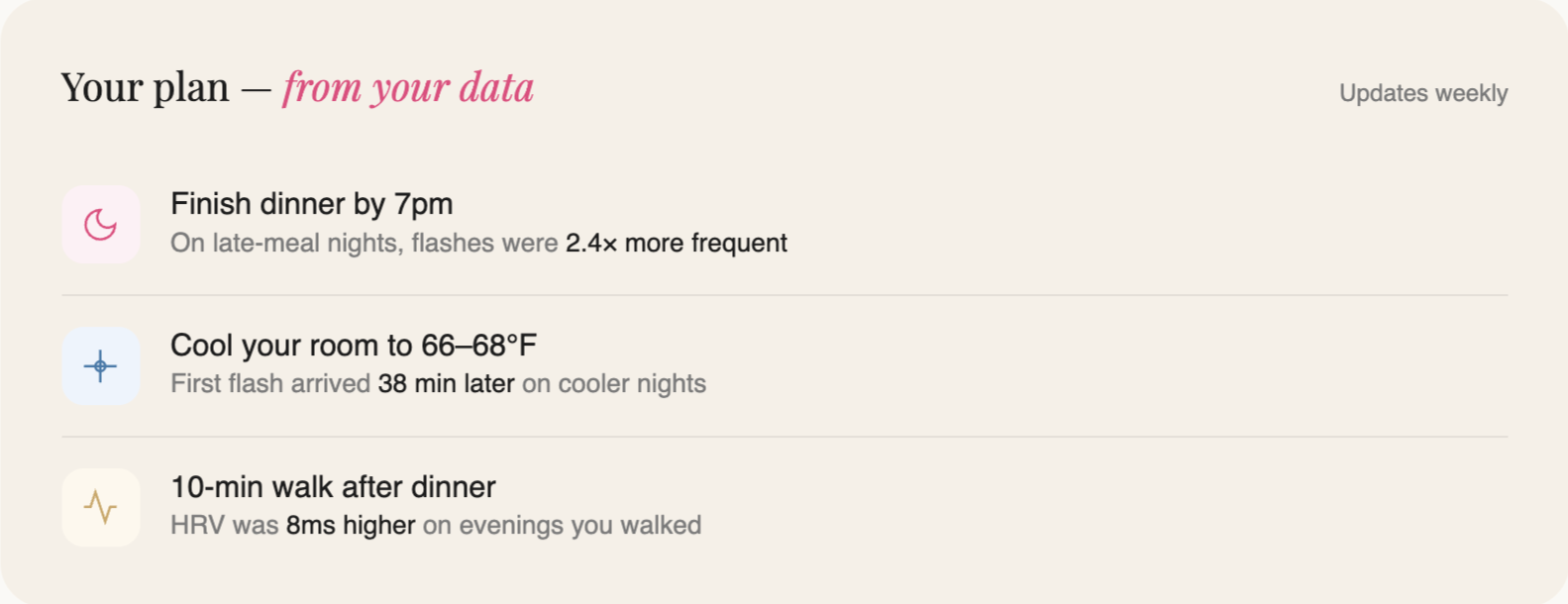
Romi looks at your overnight data the way a sleep scientist would, mapping exactly when disruptions happen, what triggers them, and what small changes to your routine could give you back hours of quality sleep.
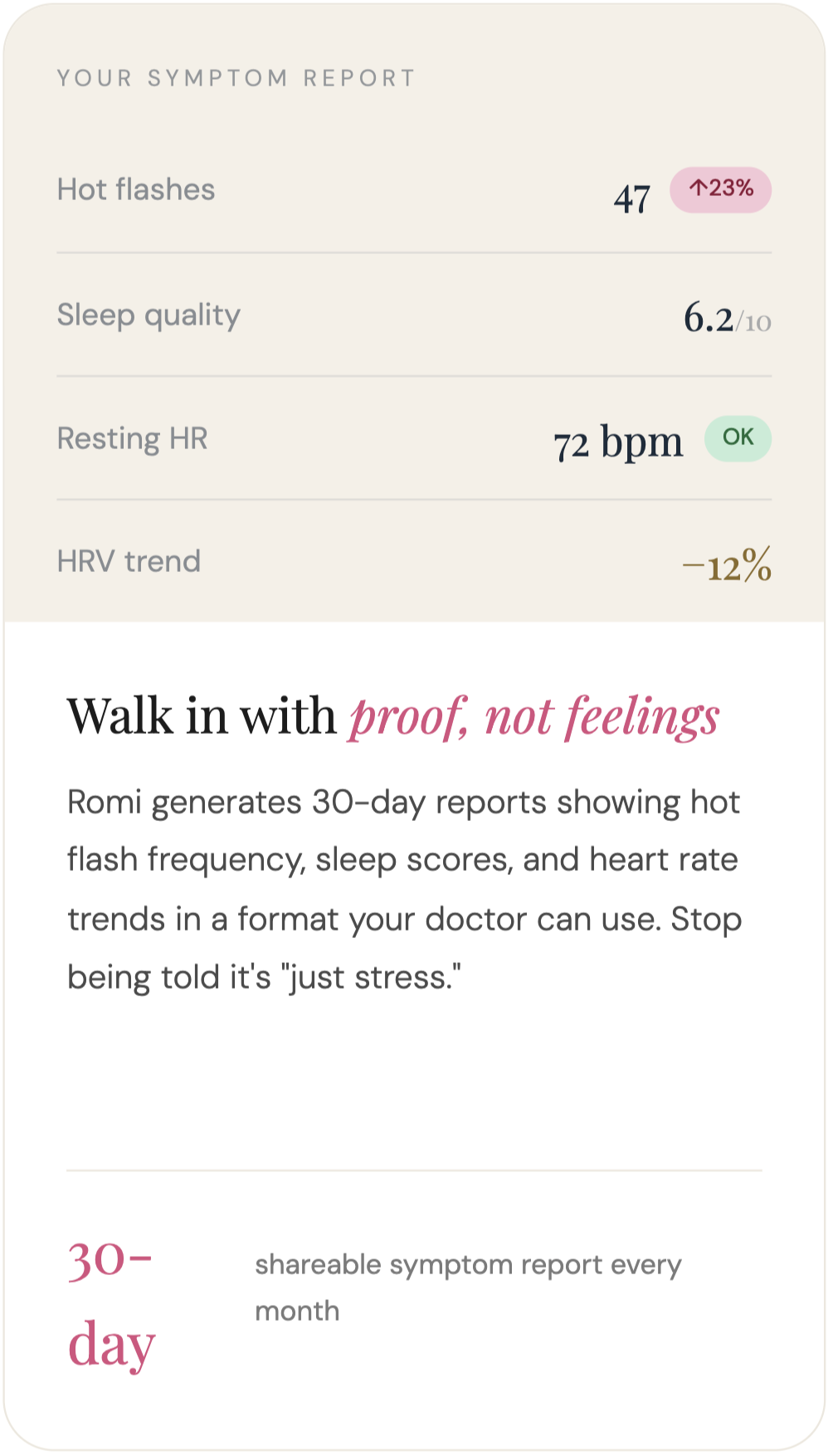
Advocate for yourselfWalk in with data, leave with answers.
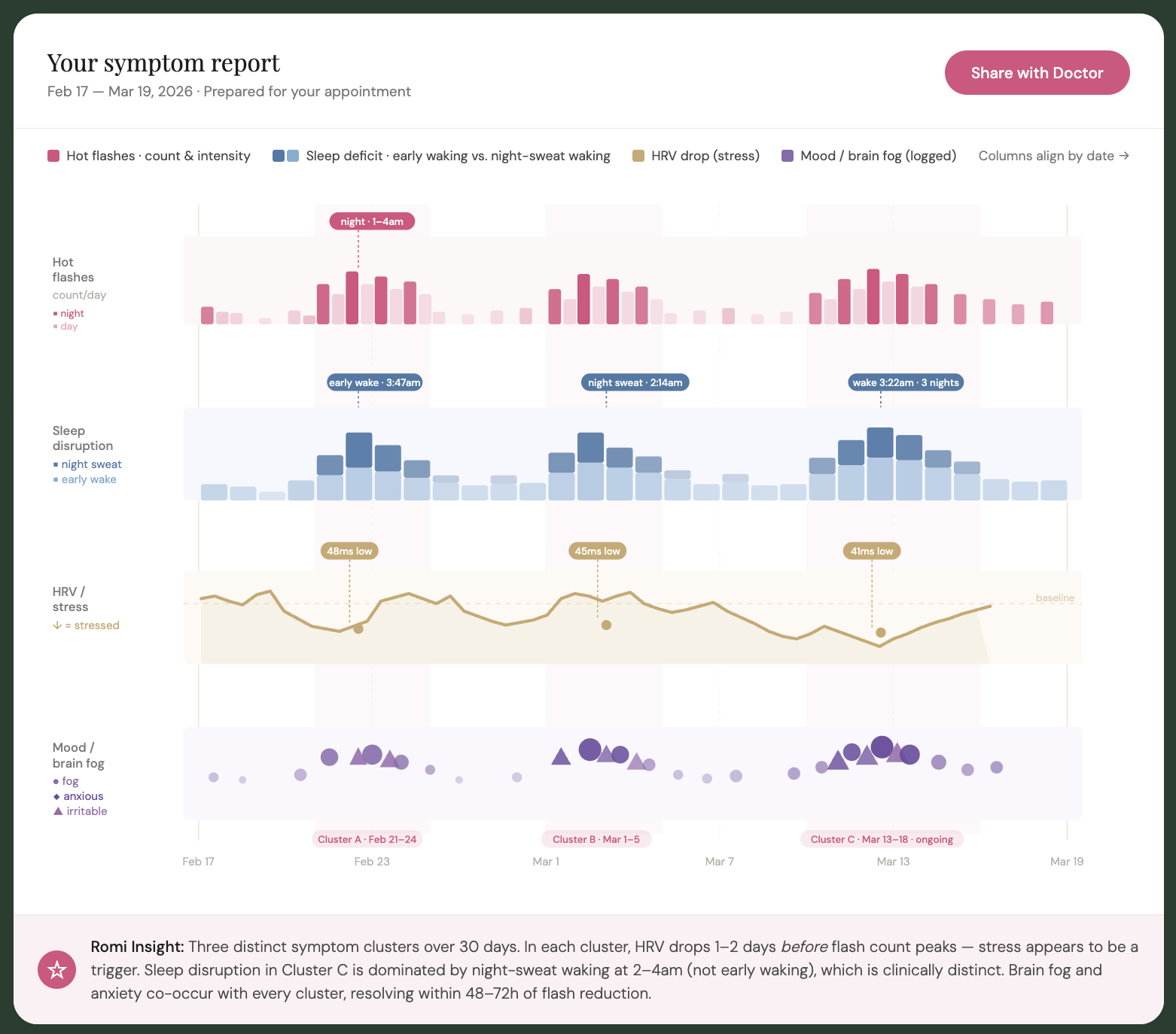
Export physician-optimized symptom reports to get the correct type of treatment for your menopausal symptoms.
Women experiencing menopause symptoms are regularly seen by 3–4 specialists before getting answers. Romi closes that gap.
FAQQuestions we actually get asked.
Got more questions? Email us at hello@romi.care.
-
Romi is designed for women experiencing:
Perimenopause (the hormonal transition leading up to menopause)
Menopause
Post-menopause health changes
Many women begin noticing symptoms in their late 30s to early 50s, including sleep disruption, hot flashes, mood shifts, and brain fog.
-
Romi combines biometric tracking with symptom logging to understand how your body changes during menopause.
It tracks signals such as:
Sleep patterns and sleep quality
Heart rate and physiological stress patterns
Body temperature trends
Activity and recovery signals
Hot flashes and night sweats
Self-reported symptoms like mood changes or nutrition
Together, these signals help Romi identify patterns in your menopause experience.
-
Accurate menopausal symptom tracking is the #1 informant for treatment, yet menopausal symptoms often change day to day, making them easy overlook, misreport, or forget during doctor visits.
Tracking symptoms like hot flashes, sleep disruption, mood changes, and fatigue alongside biometrics such as heart rate and temperature helps reveal patterns in how your body is changing.
Research shows that longitudinal symptom tracking can increase menopause diagnosis rates and improve conversations with healthcare providers, helping women receive more effective care.
Over time, tracking your symptoms helps you understand triggers, monitor changes across perimenopause and menopause, and make more informed decisions about your health.
-
Perimenopausal symptoms are often difficult to diagnose because they fluctuate and affect multiple body systems.
The most effective way to track perimenopause is through longitudinal monitoring, which includes:
Tracking sleep patterns
Monitoring heart rate and temperature trends
Logging symptoms like hot flashes, mood changes, and fatigue
Identifying patterns over weeks or months
Long-term symptom tracking can significantly improve diagnosis and treatment conversations with healthcare providers.
-
Yes. Romi tracks physiological signals that change throughout the menstrual cycle, including body temperature patterns, sleep, and other biometric trends. By monitoring these signals over time, Romi can help identify patterns that suggest whether ovulation may still be occurring.
This can be especially helpful during perimenopause, when cycles become irregular and it’s often unclear if ovulation is still happening.
Romi doesn’t replace medical testing, but it can provide helpful insights about your cycle patterns and hormonal transition.
-
Menopause affects several biological systems, which can be reflected in biometric signals.
Common changes include:
Increased sleep disturbances
Heart rate variability changes linked to stress and hormone shifts
Temperature fluctuations related to hot flashes
Changes in recovery and physiological stress patterns
Tracking these signals continuously helps identify patterns across the menopause transition.
-
Many women begin experiencing perimenopause symptoms in their late 30s or early 40s.
If you are experiencing symptoms and want to get the best treatment, symptom tracking will be your physician’s best informant for treatment planning.
Tracking symptoms early can help detect patterns before symptoms become severe and provide valuable information for healthcare providers.
-
Romi is designed as a health insight platform that helps women understand patterns in their biometric signals and symptoms.
It is not intended to diagnose or treat medical conditions, but it can support more informed conversations with healthcare providers.
-
Romi is currently in development and preparing for pilot testing and early production.
Joining the waitlist gives you access to product updates, launch announcements, and potential early access to the first release.
Join the movementYou deserve to understand
your own body.
Join thousands of women who are done being dismissed — and ready for real answers.
We respect your privacy. No spam, ever